
 Brij Khandelwal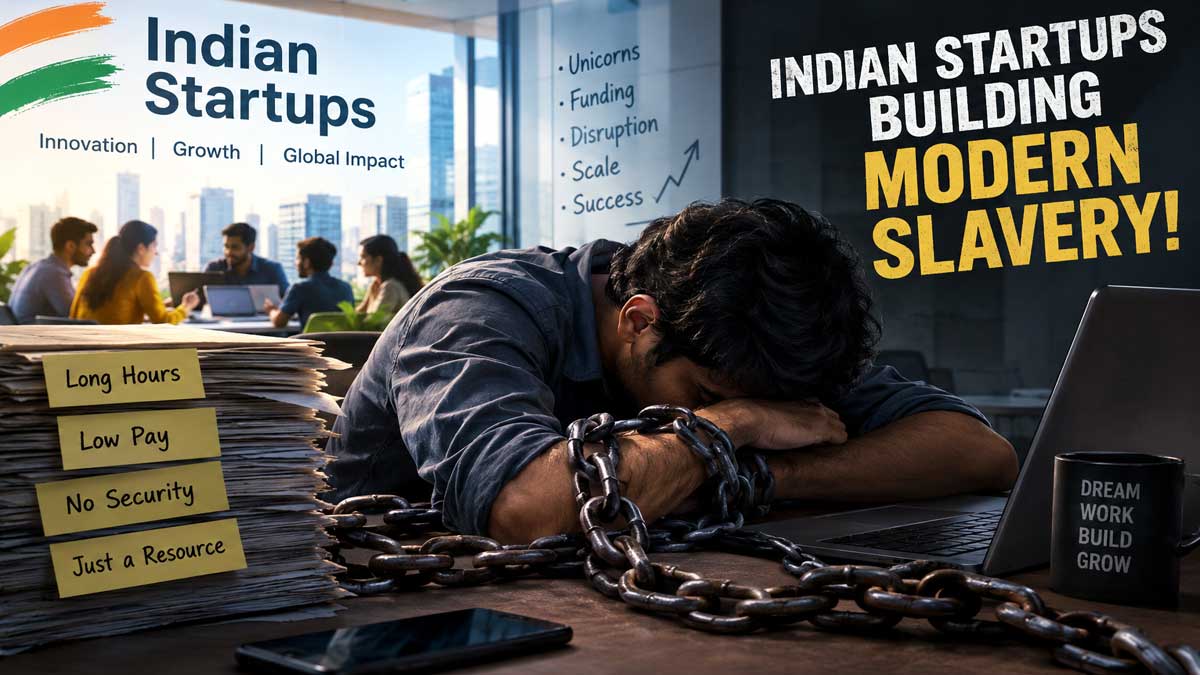
A 28‑year‑old Uday Nath, a heavy bag slung over his shoulder, weaves through traffic toward Defence Colony. Ramesh Choudhary, who came from Bihar, climbs four flights of stairs to deliver groceries. Outside a sweet shop, Babu Lal stares at his phone, waiting for the next order. Economists, cataract-eyed ones, call this the ‘startup revolution’. But is it really a revolution, or merely a digital remake of an old feudal order?
The faces have changed. Where once stood the ‘lathait’ landlord, now stand hoodie‑wearing founders. The coolie no longer hauls suitcases; he carries food packets and grocery bags. But the structure remains the same. In our big cities, millions of migrant youths are the backbone of quick commerce, delivery apps, logistics and platform companies. Investors applaud billion‑dollar valuations. Startup founders are hailed as new‑India ‘icons’. Ads call delivery workers ‘heroes’ and ‘partners’. Behind the glossy language, however, is a bitter truth: these modern coolies work hard, but rarely get to display or develop real skills.
Also read: भारत के स्टार्टअप गढ़ रहे हैं ‘आधुनिक गुलामी’!
For two centuries the coolie has borne the burden: first under the British, now under global capital. Whether the white man’s man‑Friday or the babu’s porter, the pattern repeats. A young man from Bihar, Jharkhand, eastern Uttar Pradesh or Rajasthan rides for ten hours a day, braving rain, sun, pollution and accidents. What remains after five years? A damaged body and an uncertain future. This is not job creation; it is intensified labour exploitation.
Manufacturing and engineering have not advanced fast enough, and our economy is shifting toward a ‘convenience‑service’ model. Middle‑class consumers press an Aladdin button for comfort, and an invisible worker appears at the door with goods in ten minutes. Comfort has become a new religion.
While India talks about AI, Digital India and innovation, millions remain trapped in elementary labour cycles. Urban convenience rests on the shoulders of these migrant workers, says public commentator Prof Paras Nath Choudhary.
As sociologist TP Srivastava notes, our language helps hide the truth: the coolie becomes a ‘gig partner’, jobs become ‘flexibility’, exploitation becomes ‘opportunity’. Startup culture often looks like an old mansion coated with fresh paint.
This problem isn’t limited to delivery apps. India has seen similar patterns before. During the BPO and IT services boom, millions entered call centres and outsourcing roles. Initially it felt like an economic miracle: wages rose, an English‑speaking generation emerged, families celebrated. Two decades later, the glow has faded. Large numbers learned limited, repetitive skills and became replaceable parts of the global services machine. We produced armies of degree holders, but not a proportional growth in innovation, research and manufacturing capacity.
Today’s gig economy is repeating that mistake on a far larger scale. A delivery rider may earn a living, but should that be the aspiration of a nation’s youth? If work traps people instead of elevating them, that is not development but organised stagnation. The most dangerous cost is psychological.
Urban India depends entirely on migrant labour. Hot meals arrive because someone gets soaked in the rain. Parcels reach homes overnight because someone foregoes sleep. Groceries appear in ten minutes because someone risks health. Yet we rarely ask: what happens to that rider at forty? Who will treat his damaged spine? If algorithms make him redundant, who will teach him new skills?
A civilisation’s worth is measured not by its billionaires but by the dignity afforded its workers. Wages should be a ladder, not a quagmire. Societies progress when workers move from muscle to skill.
This is not modernity; it is digital feudalism. The startup story should not be only about producing unicorns. It must also build skilled, dignified citizens. An economy that can deliver a burger in ten minutes but cannot secure a worker’s dignity over ten years is not truly progressing; it is running in circles, like Alice in Wonderland.
Related Items
Can 'Indian Coaching Giants' inspire without misleading?
Breaking the ice in Indian Higher Education…
Indian schools lost plot and coaching became only gateway to success…