
 Samiksha Bharti News Service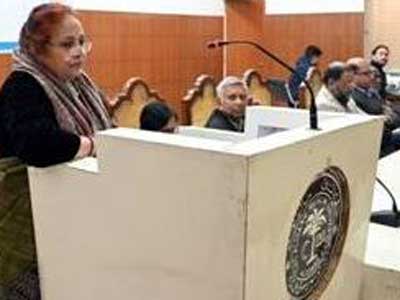
Aligarh: The one-week Global Initiative of Academic Networks i.e. GIAN Course on ‘New Female Subjectivities: Tradition, Modernity, and Gender in Nineteenth and Twentieth Century North-West India (and Pakistan)’, began at Aligarh Muslim University, with the course coordinator, Professor Gulfishan Khan, Chairperson and Coordinator, Centre of Advanced Study, Department of History, AMU.
Presiding over the inaugural session, renowned historian Prof Irfan Habib, Professor Emeritus, Aligarh Muslim University, delved into the historical struggles of women’s education and the challenges faced during the Aligarh Movement and the slow progress towards gender equality in women’s education.
He reiterated that modern education among Urdu-speaking women was the outcome of the indefatigable endeavours of Shaykh Muhammad Abdullah and his dedicated wife Wahid Jahan Begum.
In her welcome address, Prof Gulfizhan Khan said that the course would provide an opportunity to acquire an informed perspective on women and gender-related issues. This would be achieved through appraisal of selected source material and examination of current historiography, she added.
Earlier, Professor Shireen Moosvi, the Special guest and former director of the Advanced Centre for Women’s Studies said that women shouldered responsibilities in India’s struggle for freedom and cited examples of leaders like Sarojini Naidu and Kasturba Gandhi.
Professor MJ Warsi, Coordinator, GIAN said that it is a promising project, which is connecting Indian academia with the leading foreign institutions, faculties and renowned experts.
Professor Shafey Kidwai offered a fresh perspective on history, challenging the male-centric narratives and exploring women's consciousness and struggles, citing examples from literature.
Professor Asadullah Khan, Director IQAC, commended the progress of the GIAN course at the university and stressed its role in international collaboration and online teaching, as recognized in the NEP-2020.
Sharing his views, Professor Arif Nazir, Dean of the Faculty of Arts said that respect for women was deeply embedded in Indian mythology as well as literary tradition, which he said expressed in the emphasis on the significance of motherhood and the motherland during the National Movement.
Prof. Sarah Frances Deborah Ansari from Royal Holloway, University of London, a historian of modern and contemporary South Asia and the Foreign expert of the course, while sharing her own research experiences highlighted the importance of archival records in history writing. She also emphasized the need to read between the lines to uncover women's history.
The session ended with a vote of thanks offered by Dr. Lubna Irfan.
Related Items
‘Real Makers of India’ don’t study in ‘Fancy Schools’
India’s Pedagogical Crisis and the Erosion of the Teaching Profession
A majority of students use AI to study as of now...